
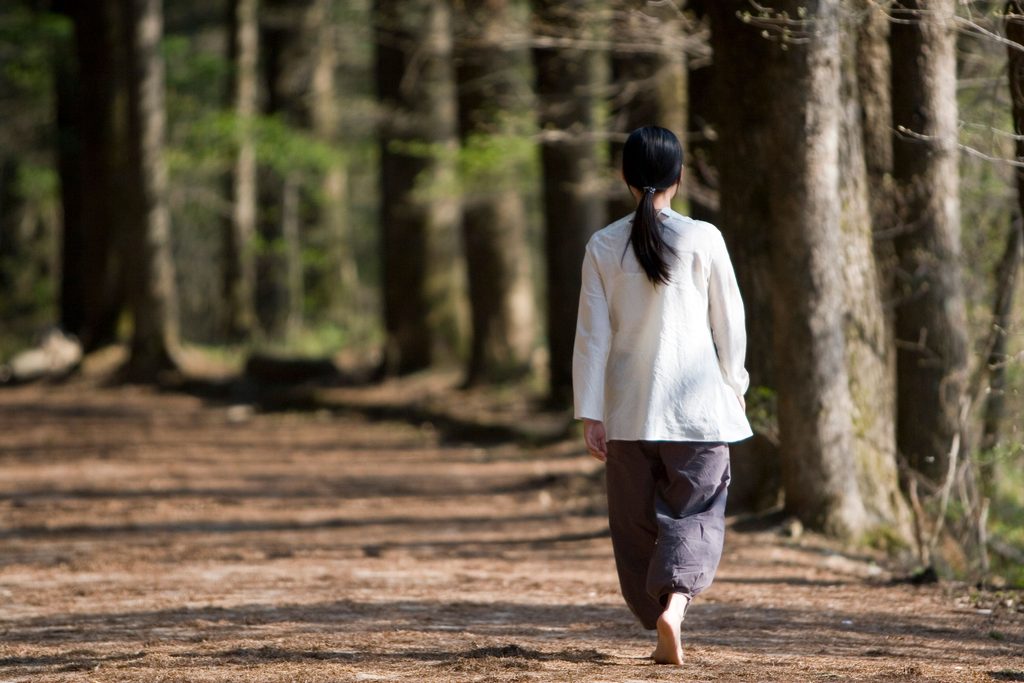
Originating in Japan during the 1980s, Shinrin-yoku (森林浴)—literally translating to “taking in the forest atmosphere” or forest bathing—has transitioned from a traditional wellness practice into a rigorously studied cornerstone of preventive medicine. Unlike hiking or wilderness survival, forest bathing is not about physical exertion; it is a mindful, sensory immersion into natural woodland environments.
A expanding body of neurobiological and immunological research demonstrates that spending structured time under a forest canopy induces measurable physiological changes. From sharp reductions in salivary cortisol to the upregulation of natural killer (NK) immune cells, forest bathing provides a scientifically validated antidote to modern chronic stress and autonomic nervous system dysregulation.
👉 Discover Comprehensive Mind-Body Wellness Strategies at MiroWellnessGuide
1. Physiological Mechanisms & Biophilic Signaling Pathways
- Phytoncide Inhalation & Immune Boost: Trees—particularly conifers like pine, cedar, and oak—emit airborne organic compounds called phytoncides (such as $\alpha$-pinene and limonene) to protect themselves from insects and microbes. When inhaled by humans, these antimicrobial volatile organic compounds trigger significant increases in human Natural Killer (NK) cell activity and anti-cancer proteins (perforin, granzyme A/B).
- Autonomic Nervous System Rebalancing: Immersion in forest environments shifts the body out of a sympathetic-dominant (“fight-or-flight”) state and activates parasympathetic tone (“rest-and-digest”). This shift results in lower resting heart rates, reduced blood pressure, and elevated Heart Rate Variability (HRV).
- Endocrine System Regulation: Multiple clinical trials indicate that just $2\text{ hours}$ of forest bathing significantly lowers systemic concentrations of cortisol (the body’s primary stress hormone), adrenaline, and noradrenaline compared to walking in urban environments.
                 [ Sensory Immersion in Forest Canopy ]
                                     |
         +---------------------------+---------------------------+
         |                                                       |
         v                                                       v
  [ Inhalation of Phytoncides ]               [ Visual & Auditory Fractals ]
  - Organic Volatile Compounds                - Parasympathetic Activation
  - Elevated NK Cell Activity                 - Reduced Amygdala Hyperreactivity
         |                                                       |
         +---------------------------+---------------------------+
                                     |
                                     v
                 [ Systemic Stress & Immune Response ]
                 - Suppressed Salivary Cortisol & Adrenaline
                 - Lowered Systolic/Diastolic Blood Pressure
                 - Enhanced Mood State & HRV Elevation
2. Practical Protocols & Evidence-Based Immersion Frameworks
- Sensory Engagement Protocol: Disconnect fully from digital devices. Walk slowly and aimlessly, intentionally engaging all five senses—listen to wind through the leaves, touch mossy tree bark, inhale the moist soil aroma (geosmin), and observe the natural fractal patterns of green leaves.
- Duration & Frequency Thresholds: Research shows that a minimum of $120\text{ minutes}$ per week spent in natural settings yields optimal mental and physical health benefits. A single 2-hour forest bathing session can sustain elevated NK cell activity for up to $7\text{ days}$.
- Urban Nature Integration: If deep old-growth forests are inaccessible, public botanical gardens, densely wooded city parks, or nature reserves provide comparable, high-value micro-restoration benefits for stress mitigation.
의료 디스클레이머 (Medical Disclaimer):
본 콘텐츠는 산림욕(Shinrin-yoku)의 생리학적 효과 및 스트레스 완화 메커니즘에 관한 학술 정보 제공을 목적으로 작성되었습니다. 산림욕은 스트레스 감소 및 면역력 보조 치료 수단이며, 중증 우울증, 불안 장애, 고혈압 등의 임상적 질환을 대체할 수 없으므로 관련 증상이 있는 경우 전문 의료진과의 상담이 필요합니다.
[Final Summary Table]
| Physiological Parameter | Urban Environment Baseline | Forest Bathing (Shinrin-yoku) Impact | Underlying Biological Mechanism | Sustained Effect Duration |
| Salivary Cortisol Levels | Elevated due to sensory overstimulation | $13.4\% – 15.8\%$ Reduction | Downregulation of the HPA axis | $24 – 48\text{ hours}$ post-session |
| Natural Killer (NK) Cells | Baseline immunocompetence | $+40\% – 50\%$ Increase in Activity | Inhalation of antimicrobial phytoncides | Up to $7 – 30\text{ days}$ |
| Heart Rate Variability (HRV) | Suppressed (Sympathetic dominance) | Significant Increase (High Frequency) | Parasympathetic nervous system activation | Immediate to $24\text{ hours}$ |
| Blood Pressure (Systolic) | Baseline / Stress-induced spikes | Significant Drop ($\sim 5 – 7\text{ mmHg}$) | Reduced vascular resistance & cardiac load | Immediate post-session |
| Prefrontal Cortex Activity | High cognitive fatigue / Rumination | Restorative Relaxation State | Soft fascination via natural visual fractals | Sustained throughout the day |